
Pushchair mistakes first-time parents make (and how to avoid them)
Buying a pushchair is one of those decisions that can feel bigger than expected. It’s something you’ll use every day, whether on quick trips out, longer walks, or all the in-between moments that quickly become part of your routine.
The right pushchair doesn’t just get you from A to B. It makes those everyday outings feel easier, smoother, and more enjoyable for both you and your baby.
In this pushchair guide, we cover 5 common mistakes first-time parents make when buying a pushchair, and how to get it right with confidence.

1. Choosing a pushchair that doesn’t match your lifestyle
When buying a pushchair, it’s easy to choose one based on how it looks or how popular it is, without thinking about how it will fit into your daily routine.
Why it matters:
Some pushchairs are designed to be lightweight and compact for easy carrying and storage, while others focus on comfort and stability for longer outings or more varied surfaces. If you travel frequently, a compact or cabin-approved stroller can make a big difference; but if you regularly walk on uneven paths or in parks, choosing the best pushchair for rough terrain becomes especially important.
How to get it right: quick checklist
- Consider whether you need something lightweight and compact or more robust and cushioned
- Think about how often you’ll be folding, lifting, or storing your pushchair
- If you travel often, look for a compact fold or cabin-friendly stroller, like the Maxi-Cosi Fame Cabin or Oxford Cabin
- If needed, look for the best pushchair for rough terrain to handle uneven surfaces, like the Maxi-Cosi Fame

2. Not considering travel system compatibility
When buying a pushchair, you might not think about how it works with a car seat or carrycot, missing out on a more flexible setup.
Why it matters:
Being able to move your baby quickly and effortlessly from car to pushchair can make a big difference. A travel system is designed to do exactly that. By combining a pushchair with a compatible car seat and carrycot, it allows you to switch between car and street without disturbing your baby.
How to get it right: quick checklist
- Check compatibility with your chosen car seat and carrycot
- Confirm whether adapters are needed for a secure fit
- Consider a 3-in-1 travel system for maximum flexibility, for example pairing the Maxi-Cosi Zero-G with the Cabin Cot
- Make sure the setup is suitable from birth
- Look for an easy click-in system for smooth transitions between car and pushchair
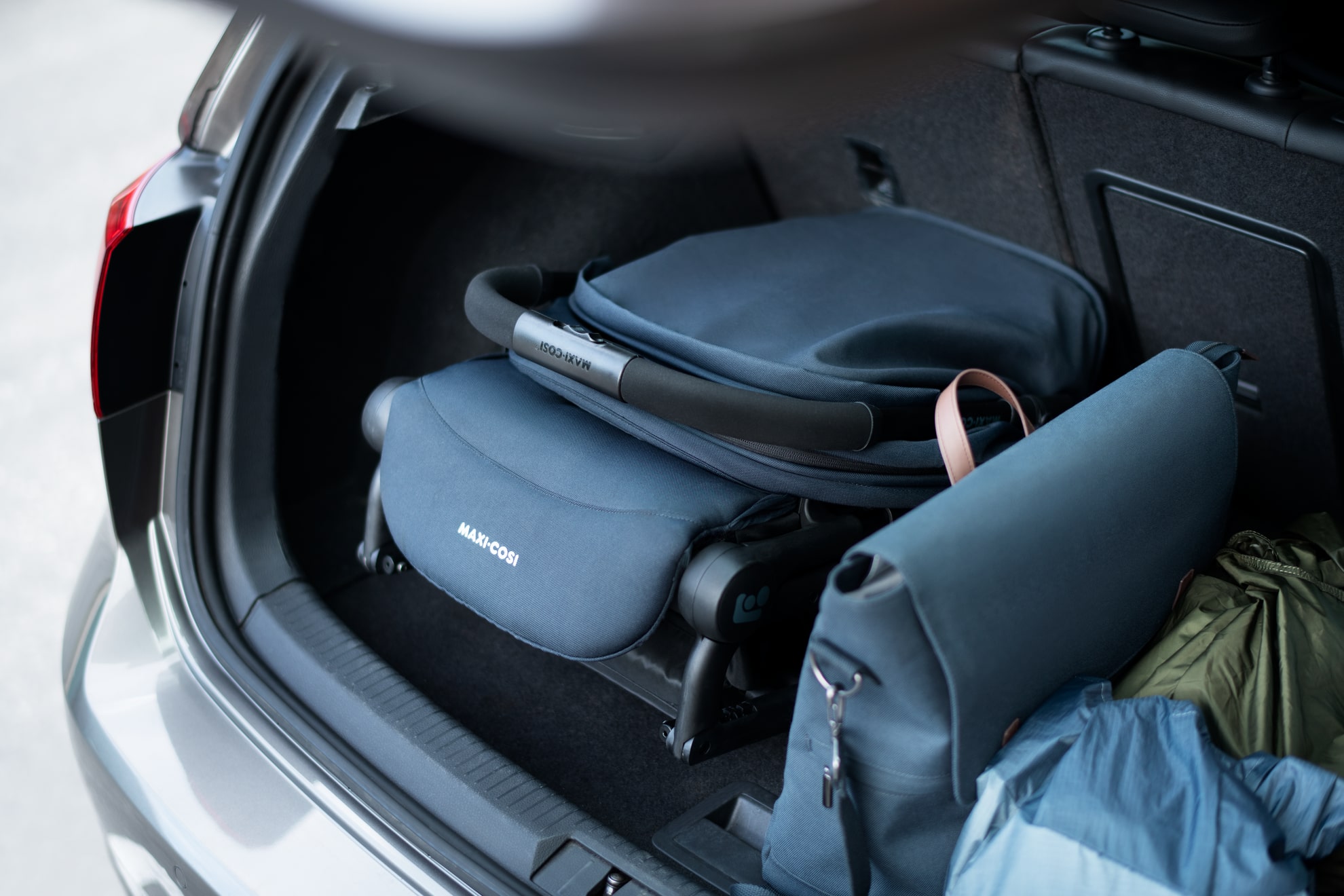
3. Not checking space: car boot and home storage
When buying a pushchair, it can seem compact in-store, but feel very different when you try to fit it into your car or hallway.
Why it matters:
A pushchair that’s easy to store and transport will fit naturally into your routine, rather than becoming something you have to work around.
How to get it right: quick checklist
- Measure your car boot before buying a pushchair
- Check folded dimensions, not just weight
- Test folding and lifting in-store
- Measure your hallway or storage space
- If you live small, look for compact-fold or upright-standing designs, like the Maxi-Cosi Eva³

4. Overlooking key comfort and usability features
When buying a pushchair, it’s easy to focus on big decisions like style or price, while other important features are left unchecked.
Why it matters:
Details like suspension, handlebar height, and storage can completely change how a pushchair feels to use day to day. This is especially true if you need the best pushchair for rough terrain, where comfort and shock absorption really matter.
How to get it right: quick checklist (and what to test in-store)
If you can, test your pushchair in-store to see how it really feels to use day to day.
- Adjust the handlebar and check comfort for you and your baby
- Test steering and responsiveness, using one hand and two
- Fold and unfold it a few times; consider if one-hand folding matters for your routine
- Lift it as if placing it into your car boot to assess weight and balance
- Check suspension and how smoothly it handles movement
- Make sure storage is practical and easy to access
- Test the brake and key adjustments to see if they feel intuitive
- Look at the sun canopy for coverage and protection

5. Choosing a colour or fabric that’s hard to keep looking good
When buying a pushchair, you might choose a colour or finish you love, but it quickly shows signs of everyday use.
Why it matters:
Pushchairs are used daily in all kinds of conditions. Choosing the right materials and finishes helps keep them looking good over time.
How to get it right: quick checklist
- Choose durable, easy-care fabrics
- Consider how often you’ll be outdoors
- Check cleaning instructions
- Pick colours that fit your lifestyle and personal style
Styling tips
Your pushchair is part of your everyday look, whether it’s parked in your hallway or out on a coffee run. The key is choosing a style that feels like a natural extension of your home and wardrobe, while also making sure it performs effortlessly in real life.
Choose a colour strategy that works for you: Neutrals are timeless and easy to pair while warmer and brighter tones can add personality while still feeling modern
Match your personal style: If your wardrobe leans classic, keep the pushchair refined; if it’s more relaxed, softer or warmer tones can fit naturally
Build a look with accessories: A changing bag or footmuff can complement or elevate the overall look - You can stay tonal for a seamless feel, or introduce subtle contrasts for a more styled finish