
How to Bottle Feed a Baby the Right Way (Position, Flow & Timing)
Bottle feeding is one of those things that looks simple from the outside and feels anything but on day one. The truth is that it’s a skill you and your baby learn together, feed by feed. Nobody is born knowing how, on either side of the bottle, and it usually comes together faster than you might think.
If you’re learning how to bottle feed a baby, this guide walks through the whole rhythm of a feed — from spotting the early signs of hunger to finding a comfortable feeding position and recognising when your baby has had enough.
Recognise early hunger cues
Babies usually tell you they're hungry well before they cry. If you can catch these earlier signals, feeds tend to start calmer for everyone. Look out for:
- Rooting, where your baby turns their head and opens their mouth as if searching
- Hand-to-mouth movements, or bringing fists up towards the face
- Opening the mouth, or making sucking and lip movements
- Restlessness and general fidgeting
- Becoming more alert and active
Crying is a late hunger cue rather than the starting gun, so if it gets that far, it doesn't mean you've missed a window or done anything wrong. A baby who's already upset may just need a moment to settle before they can feed well.
Prepare the bottle and feeding space
A calm feed starts with a calm setup. Before you pick up your baby, it helps to have everything ready:
- Prepare the milk safely, following the approved method for your formula or expressed milk
- Use equipment that's been properly cleaned and sterilised
- Settle somewhere comfortable where you can support your own back and arms
- Keep anything you might need, like a cloth or a drink for yourself, within easy reach
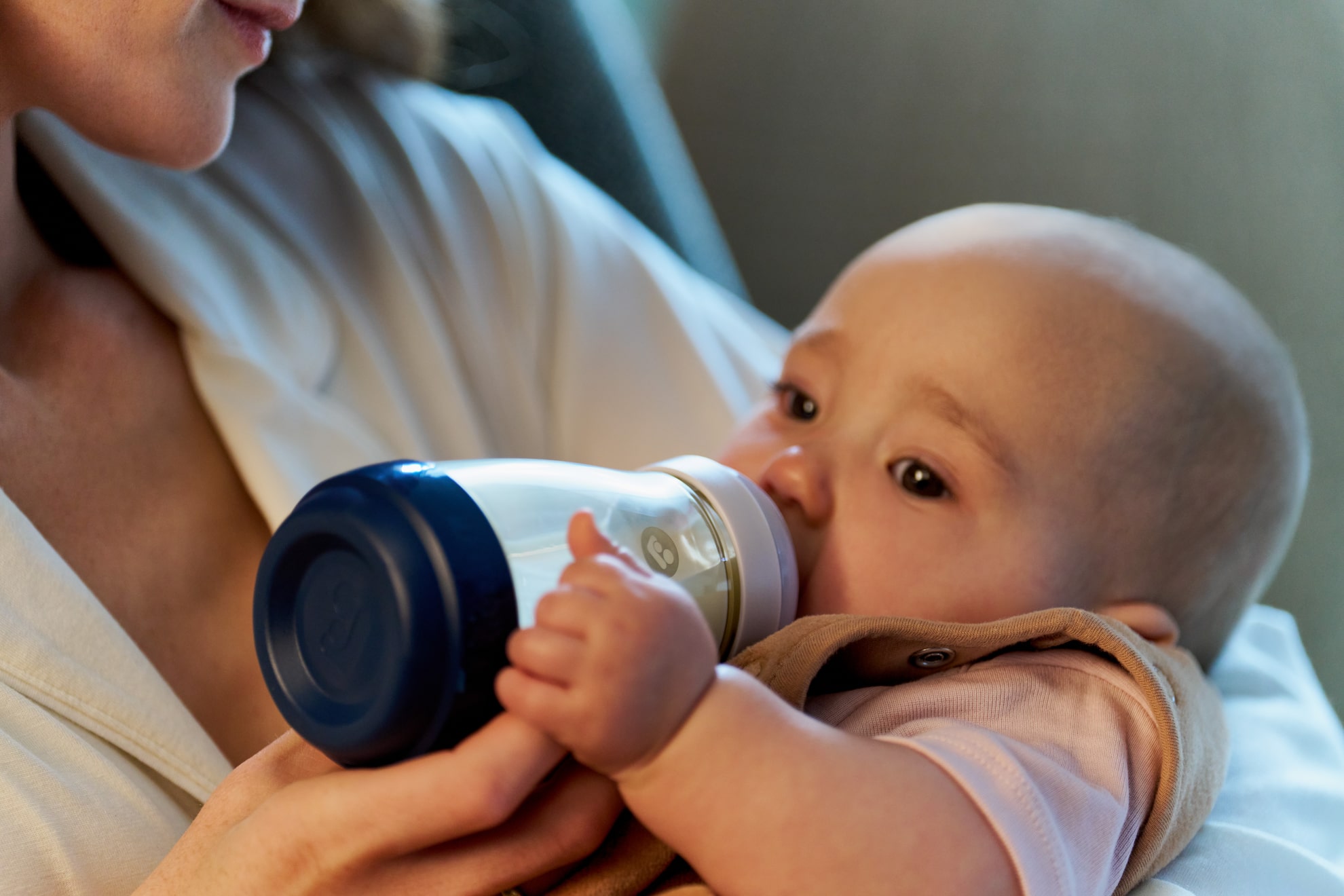
Position the baby for bottle feeding
Hold your baby in a supported, semi-upright position, with their head and neck gently aligned rather than tipped forward or back. This lets them feed comfortably and stay in control of the pace.
Two things to avoid: feeding your baby lying flat, and propping the bottle so it feeds them without you holding it. Both make it harder for your baby to manage the flow and to stop when they need to. Bottle feeding is meant to be a hands-on, responsive moment, and staying with the bottle throughout is part of what keeps it safe.
Offer the teat gently
Rather than putting the teat straight into your baby's mouth, invite them to take it. Brush it lightly against their lips and let them open up and draw it in themselves, the way they would lead a feed at the breast.
It's a small thing, but letting your baby accept the teat rather than having it pushed in keeps them in charge and makes the whole feed feel calmer. There's never any need to force a feed, and a baby who's leading tends to be a more comfortable, settled one.
Control the flow and pace the feed
Keeping the bottle mostly horizontal, or only slightly tipped so the teat stays full, helps avoid a rush of milk that's hard for your baby to keep up with. The aim is a steady, manageable flow rather than a fast one.
Just as important are pauses. Let your baby take natural breaks during the feed so they can coordinate sucking, swallowing and breathing without feeling rushed. These little rests are completely normal, and there's no need to keep the feed going in one continuous go.
Watch for pause, stress and fullness cues
Knowing how to bottle feed a baby also means learning to follow their cues. Your baby will show you when they need a break or when they've had enough. Signs to watch for include:
- Turning their head away
- Stopping sucking or losing interest
- Pushing the bottle away with their mouth or hands
- Milk spilling from the corners of the mouth
- Coughing, spluttering or becoming unsettled
When you see these, pause the feed or bring it to a close rather than encouraging your baby to finish what's left. A bottle doesn't need to be emptied to have been a good feed, and respecting your baby's fullness is one of the most useful habits you can build early on.
Burping and what to do after the feed
Burping can be offered during those natural pauses, or afterwards if your baby seems a little uncomfortable. A gentle upright hold with soft pats or rubs on the back is usually all it takes, and not every feed will produce a burp, which is fine.
After the feed, handle any unfinished milk according to the approved guidance for your area, and clean the bottle and teat ready for next time.
How often and how much do babies feed?
This is the question every parent wants a neat number for, and the honest answer is that it varies. How often and how much a baby feeds changes with their age, their growth, whether they're having formula or expressed milk, and simply who they are as an individual.
The most reliable guide isn't the clock or a fixed amount, it's your baby's own hunger and fullness cues. Feeding responsively, offering a feed when they show they're ready and letting them stop when they're done, works with your baby's needs as they change day to day. Growth spurts, in particular, can bring stretches of hungrier, more frequent feeding that settle again on their own.
If you're ever unsure whether your baby is getting enough, your health visitor can look at the fuller picture with you, including weight and nappies, which tell you far more than any single feed does.
Frequently asked questions
How long should a bottle feed take?
There's no fixed answer. The most healthy thing to do is to let your baby set the pace rather than the clock. If a feed is consistently very fast the flow may be too quick, and if it's a real struggle every time, it's worth a chat with your health visitor.
How often do babies feed?
It depends on their age and stage, and it changes over time, so feeding to your baby's cues is more helpful than aiming for a set number of feeds a day. Newborns tend to feed little and often, and the pattern gradually stretches out as they grow. Frequent feeding during a growth spurt is normal and usually temporary.
How much expressed milk should I offer?
This is best guided by authoritative, age-appropriate advice rather than a one-size-fits-all figure, since the right amount depends on your baby's age and needs. Follow your baby's fullness cues, and ask your health visitor for guidance tailored to your baby if you'd like reassurance on amounts.