
Car seat safety rules explained: What is R129 and i-Size?
When choosing a car seat for your child, ensuring it meets the latest safety standards is crucial. The most up-to-date European regulation is known as R129. Read on to learn more about how R129 improves car seat safety and why it’s the best choice for your child.
What is i-Size?
Launched in 2013, i-Size is a sub-category of the R129 European car seat safety standard, designed to provide enhanced protection and easier installation. One of its biggest advantages is that i-Size seats are designed to fit all vehicle seating positions that are approved as i-Size—eliminating the need to consult complex compatibility lists. However, cars themselves typically do not display an overall i-Size label. Instead, individual seating positions may be approved for i-Size use. To check this, consumers should either refer to the vehicle’s user manual (also known as the instruction book) or look for the i-Size logo on the specific seat.

R129 vs. R44: What’s the Difference?
R44, the older standard, categorizes car seats by weight. R129 instead uses your child’s height, making it easier for parents to choose the right seat.
🔹 Important: From September 1st, 2024, the sale of R44 car seats is prohibited within the European Union. However, if you already own an R44 seat, you can continue using it. Note that this restriction applies only to EU member states—countries outside the EU, such as the United Kingdom, are not subject to this ban and may still allow the sale of R44 seats.
That said, we highly recommend switching to an R129-compliant seat for better safety, especially since stature-based guidelines are more intuitive for parents than weight categories.
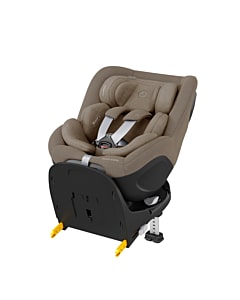
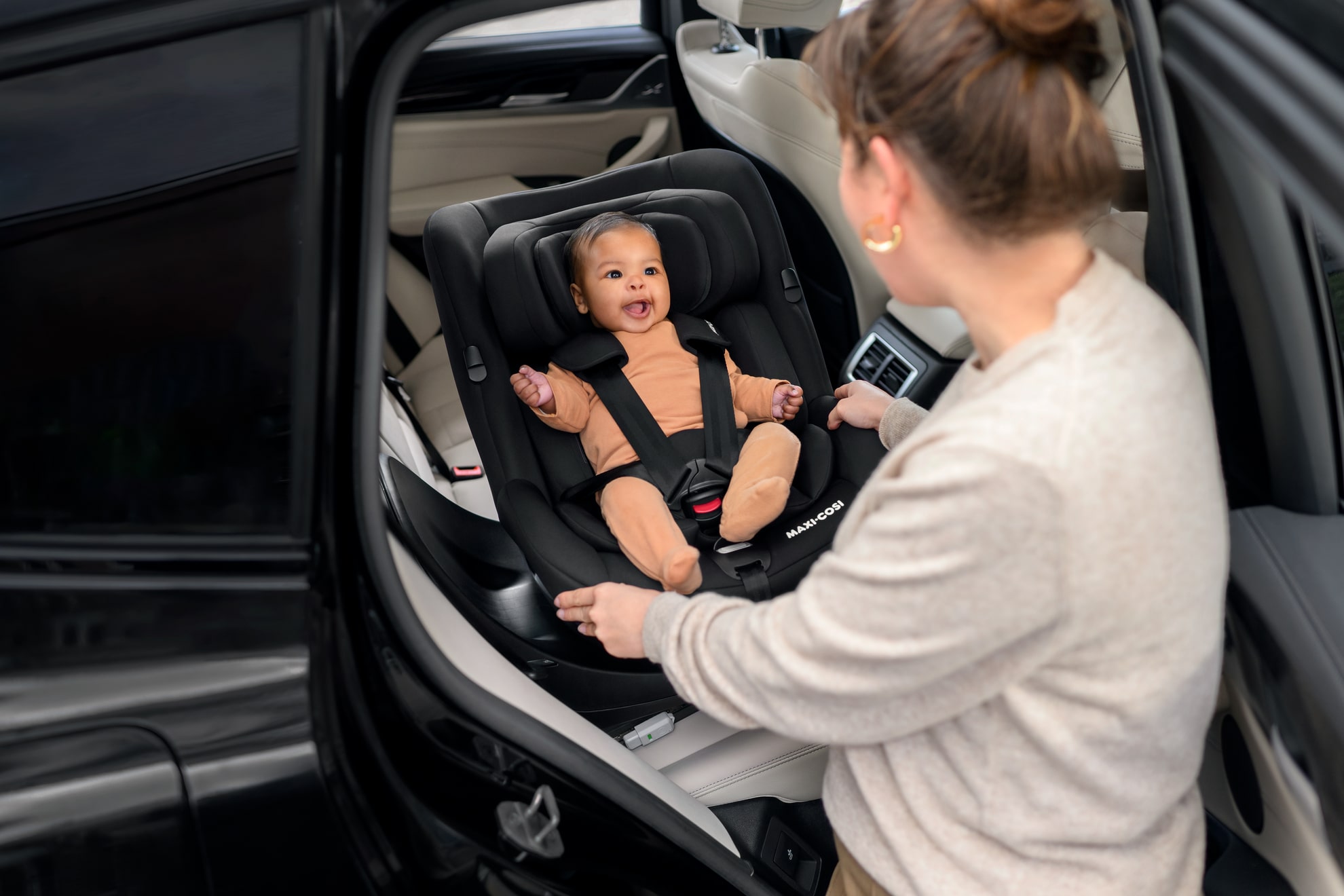
i-Size safety for your peace of mind
i-Size car seats are designed to be safer than R44 models, particularly in head and neck protection. Here’s why:
- Side-impact testing: Unlike R44 seats, i-Size car seats undergo mandatory side-impact crash tests to ensure extra safety.
- Advanced testing dummies: i-Size tests use Q-dummies, which have more sensors than older crash-test dummies, providing better safety data.
- Rear-facing travel: i-Size requires children to travel rearward-facing until at least 15 months old, with some seats allowing rear-facing use up to 105 cm (around 4 years old).
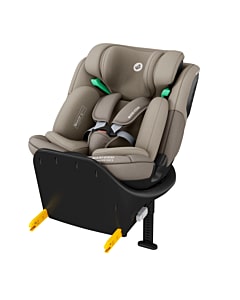
- ISOFIX installation: R129 favour installation with ISOFIX as it is inherently safer compared to installation with the vehicle belt. For this reason, the support legs are now standardized and part of ISOFIX and are guaranteed to fit in a seating position of a car that is also labelled as i-Size.

Why Rearward-Facing is Safer
According to R129 regulations, babies must not face forward before 15 months. Why? Because in a head-on collision, a rearward-facing position significantly reduces strain on your child’s neck and spine, distributing the impact forces more safely.
Many i-Size car seats allow children to remain rear-facing beyond 15 months, often until 4 years old, for even greater protection. We strongly recommend keeping your child rear-facing for as long as possible, but at least up to 2 years old.